

Too many companies chase “better branding” without ever defining what better actually means.
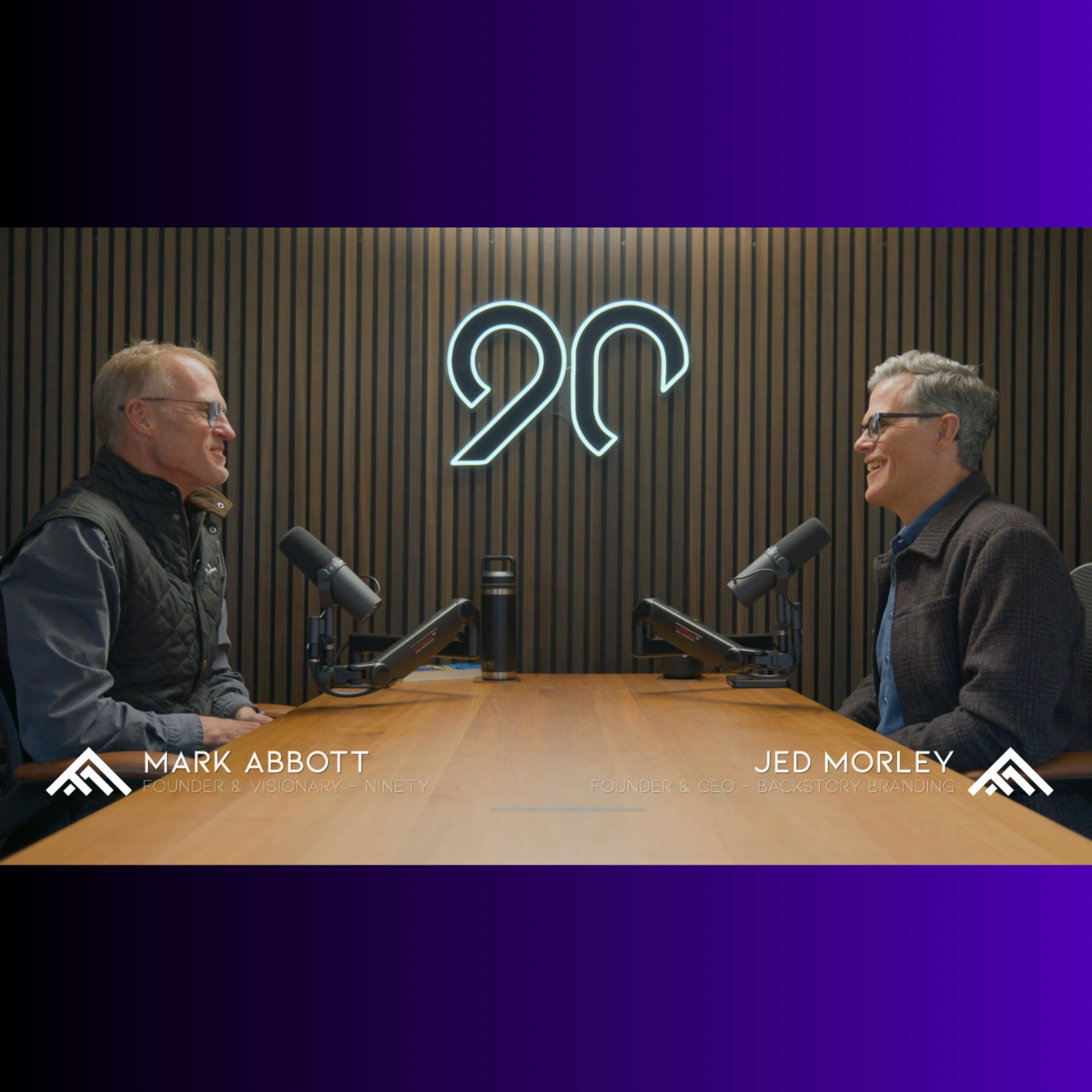
On a recent episode of The Branding Laboratory, our founder Jed Morley joined host Deevo to explore a different approach—one focused not on surface-level improvements, but on building brands that create measurable, scalable impact.
The Goal Is Multiplying Value
For many organizations, branding is treated as a creative exercise. A new logo. A refreshed website. A campaign that feels more modern.
But as Jed explains, the real objective is much more strategic.
Branding, done right, should function as a multiplier—amplifying the effectiveness of marketing, sales, and product efforts. It should make every interaction more consistent, every message more resonant, and every dollar spent more efficient.
Without that clarity, even strong execution struggles to scale.
From Marketing Leadership to Brand Strategy
Jed’s perspective is shaped by his experience inside high-growth companies like BambooHR and Consensus (formerly DemoChimp), where he saw firsthand how messaging gaps can slow momentum.
As organizations grow, what once lived in a founder’s head needs to become clear, repeatable, and scalable across the business.
That shift is where many companies get stuck.
It’s also where brand strategy becomes essential.
Brand and Performance Marketing Work Better Together
One of the most common challenges B2B companies face is separating brand and demand generation into competing priorities.
The result is predictable:
- Brand becomes abstract and disconnected from revenue
- Performance marketing becomes transactional and short-term
Jed makes the case for integration.
Strategic brand messaging defines who you are and why you matter. Audience-specific messaging translates that into language that drives action. Together, they create clarity across the entire funnel—from first impression to closed deal.
Clarity and Alignment as the “Killer App”
If there’s one idea that stands out, it’s this: clarity is the advantage.
Clear brands move faster.
Clear teams make better decisions.
Clear messaging builds trust more efficiently.
Alignment is what makes that clarity operational.
When teams share a common messaging foundation, they stop interpreting and start reinforcing. Sales conversations become more consistent. Marketing becomes more effective. Product stories connect more easily with real customer needs.
Without alignment, even great ideas get diluted.
Customer-Centric Messaging: Make the Audience the Hero
Another key theme is the shift from company-centric messaging to audience-centric messaging.
Too many brands talk about themselves—their features, their capabilities, their roadmap.
But the most effective messaging starts with the customer:
- What are they trying to accomplish?
- What problems are they solving?
- What outcomes matter most right now?
When messaging is grounded in those realities, it becomes easier to connect, easier to understand, and easier to act on.
Using a Message Library to Stand Out in an AI-Driven World
As AI-generated content becomes more common, many brands risk blending into a “sea of sameness.”
Jed highlights the importance of building a structured message library, a centralized system of approved language, positioning, and narratives that teams can use consistently.
This does two things:
- It ensures clarity and consistency across teams
- It gives AI tools a high-quality foundation to generate differentiated content
▶️ Watch the full episode here: https://youtu.be/kYLa_7p7KMQ?si=6SwTr5YbCCbW5UV9



.png)

%20-%20Made%20with%20PosterMyWall.jpg)

.png)


.png)



.png)
.png)



.png)
.png)
.png)

.png)



.png)


.png)



.png)
.png)
.png)

.png)
.png)

.png)

.png)


.png)
.png)

.png)
.png)
.png)
.png)